- Two LTF 1060-4.1 cranes from Neeb working together
- 24 trains of the Wuppertal Suspension Railway removed
- All retired trains find a new home
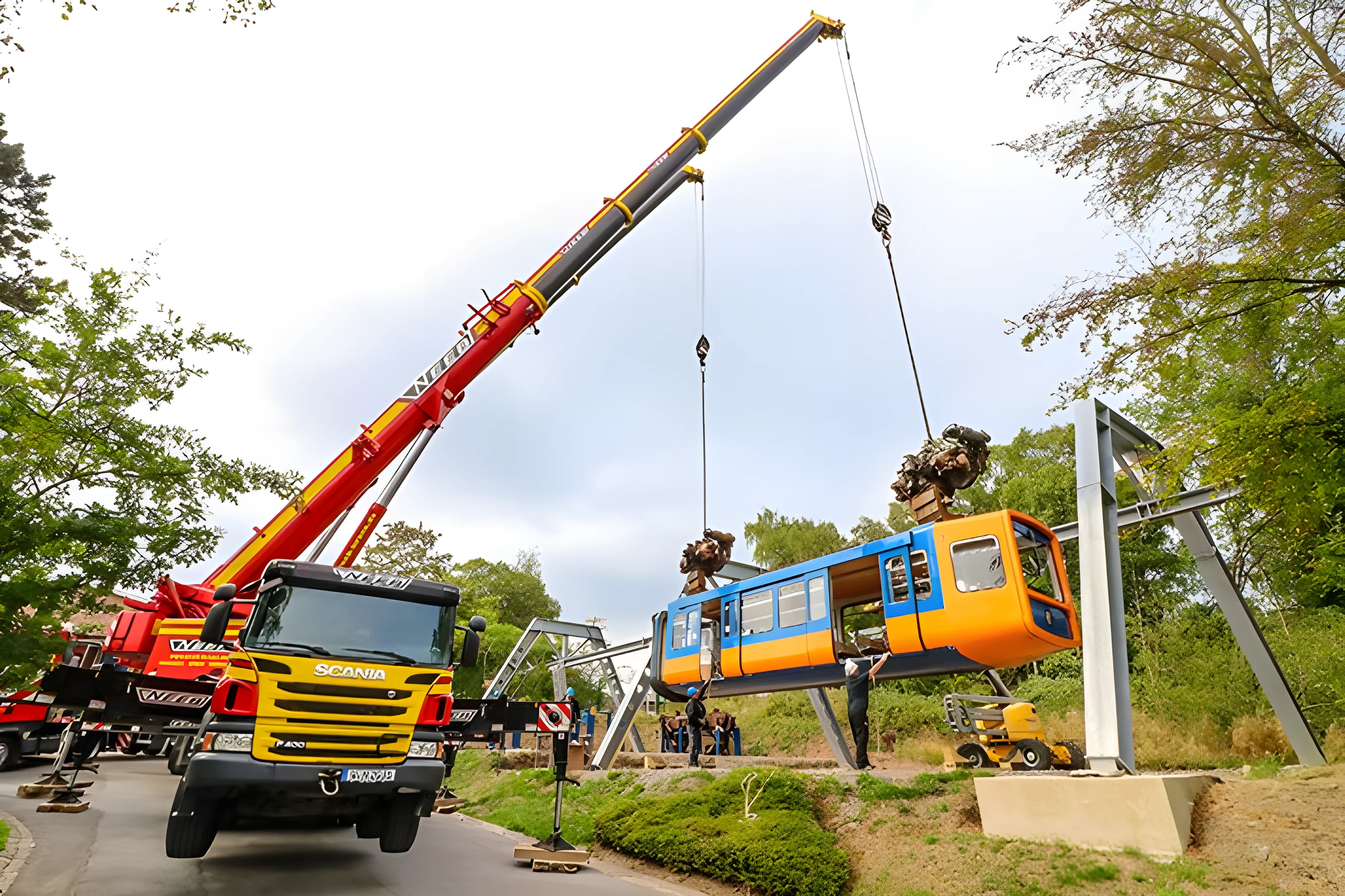
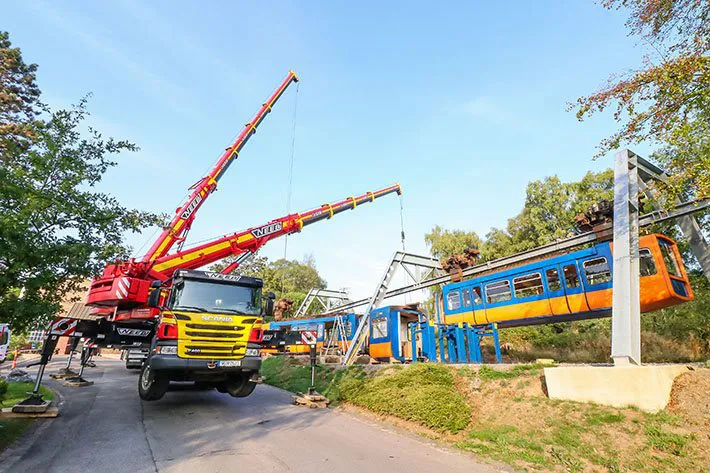
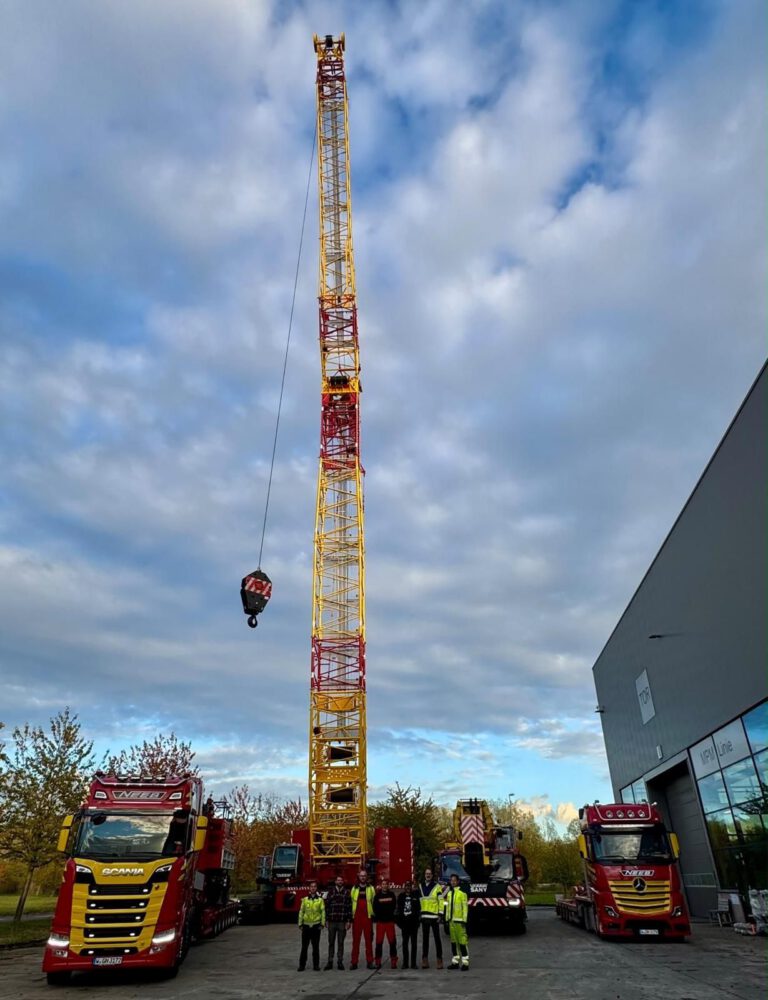
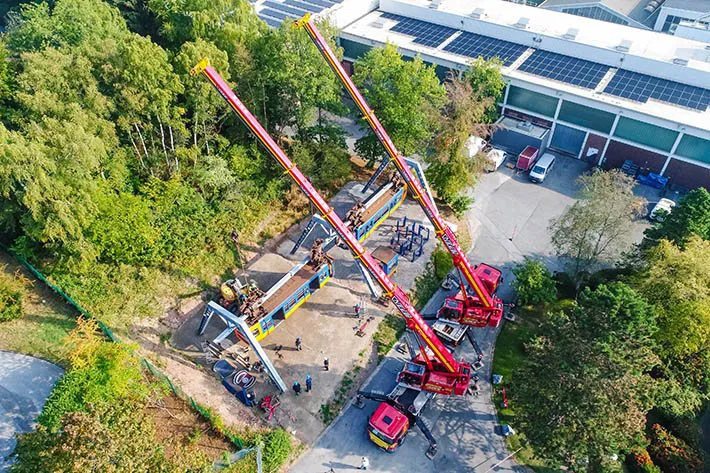
After around 45 years in operation, WSW Mobil, the operator of the Wuppertal Suspension Railway, replaced the last trains of Generation 72. After 45 years of service in most cases, the trains were decommissioned and taken to new locations. After a real hype had broken out around the old trains, they were not only sold, but some were even raffled off. Two Neeb mobile cranes of the type LTF 1060-4.1 were used for the installation at one of the new locations.
A piece of history on the hookA tandem lift by two mobile cranes seals the end of an entire generation. As the two Neeb truck-mounted telescopic cranes hang the last train of the Wuppertal Suspension Railway at its future resting place, a piece of history comes to an end at the same time. The train, which is otherwise only ever lifted with overhead cranes in the Schwebebahn workshop, was undocked from the track structure for the last time, loaded onto a low-loader and hung by the two LTF 1060-4.1 on a support frame built especially for this purpose. The Schwebebahn cars had been in service since 1972, hence the name GTW 72, which stands for “GelenkTriebWagen Baujahr 1972” (articulated railcar, built in 1972). While four of the original 28 trains were taken out of service early, the remaining 24 trains could be used until 2016. Since then, the trains have gradually been removed and replaced by the new GTW 15 generation. A GTW 72 train always consists of two end cars and a short middle section and has 48 seats and 156 standing places. Incidentally, the top speed of the Schwebebahn is 60 km/h, although this is rarely reached on the 13.3-kilometre route with its 20 stations. The line runs for around 10 kilometres above the River Wupper and 3 kilometres over land. Every year, the railway, which is a listed monument, is used by around 25 million passengers.
Loading and transport
After the retirement of the GTW 72 trains was announced, a huge hype broke out around the individual trains – so scrapping them was out of the question. Instead, 21 trains were sold and, in the end, three were raffled off in a competition. The conditions for all buyers were: transport and installation had to be handled by the buyer, and a foundation with adequate load-bearing capacity was required. If the train is set up on the ground instead of being mounted in a suspended position, the complete set of traction motors and the bogies must also be removed, as otherwise the car body cannot withstand the corresponding pressure.
Using the two LTF 1060-4.1, one train has now been lifted from the low-loader again and mounted on a specially built frame at the Wuppertal company Knipex. For the two telescopic cranes, each with a maximum lifting capacity of 60 t, the main task was to position the train safely and without damage – after all, the buyer and enthusiasts were already eagerly awaiting it. The last train to be removed is to become the centrepiece of an event location for Knipex employees and visitors. In this case, it could also be mounted complete, as it will continue to hang rather than stand on foundations.
A new home for the GTW 72 trains
Many of the trains have stayed in Wuppertal – which was also one of the requirements for getting a train. Most of the trains were placed on foundations, and some have been restored. One train is currently being converted into a bistro. Other trains have also been given new, unconventional roles: from play equipment to a stand at the edge of a football pitch to an event location.